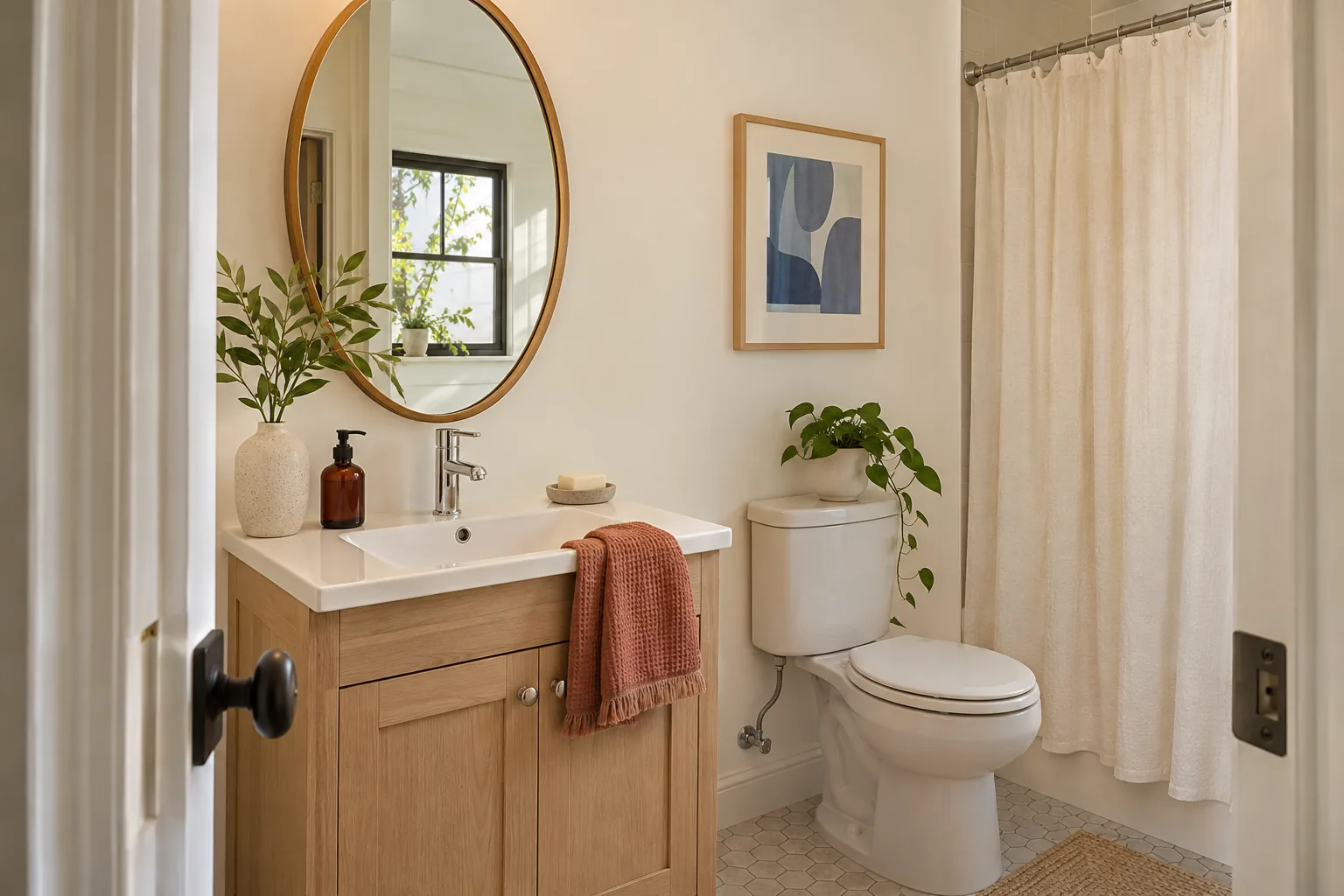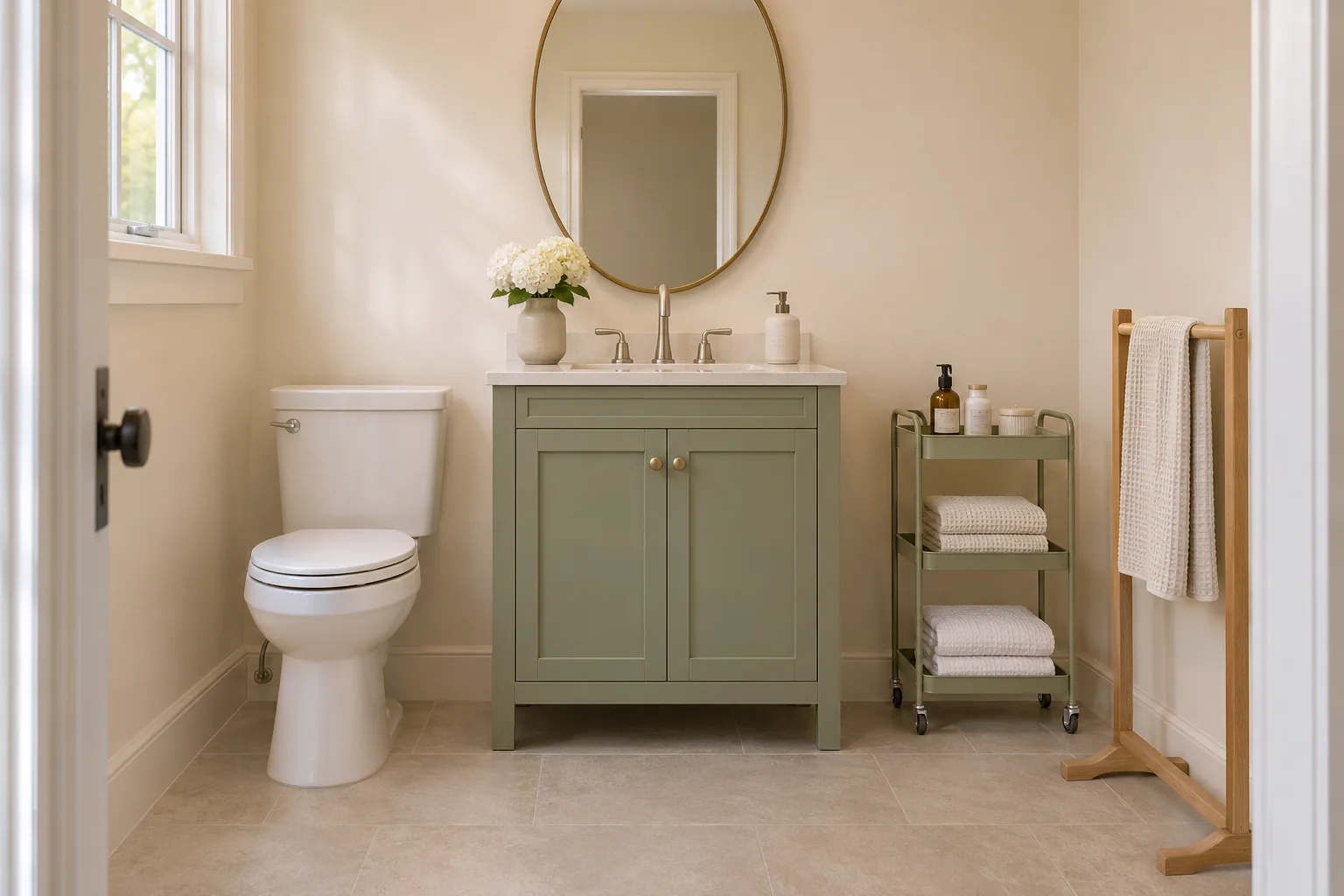
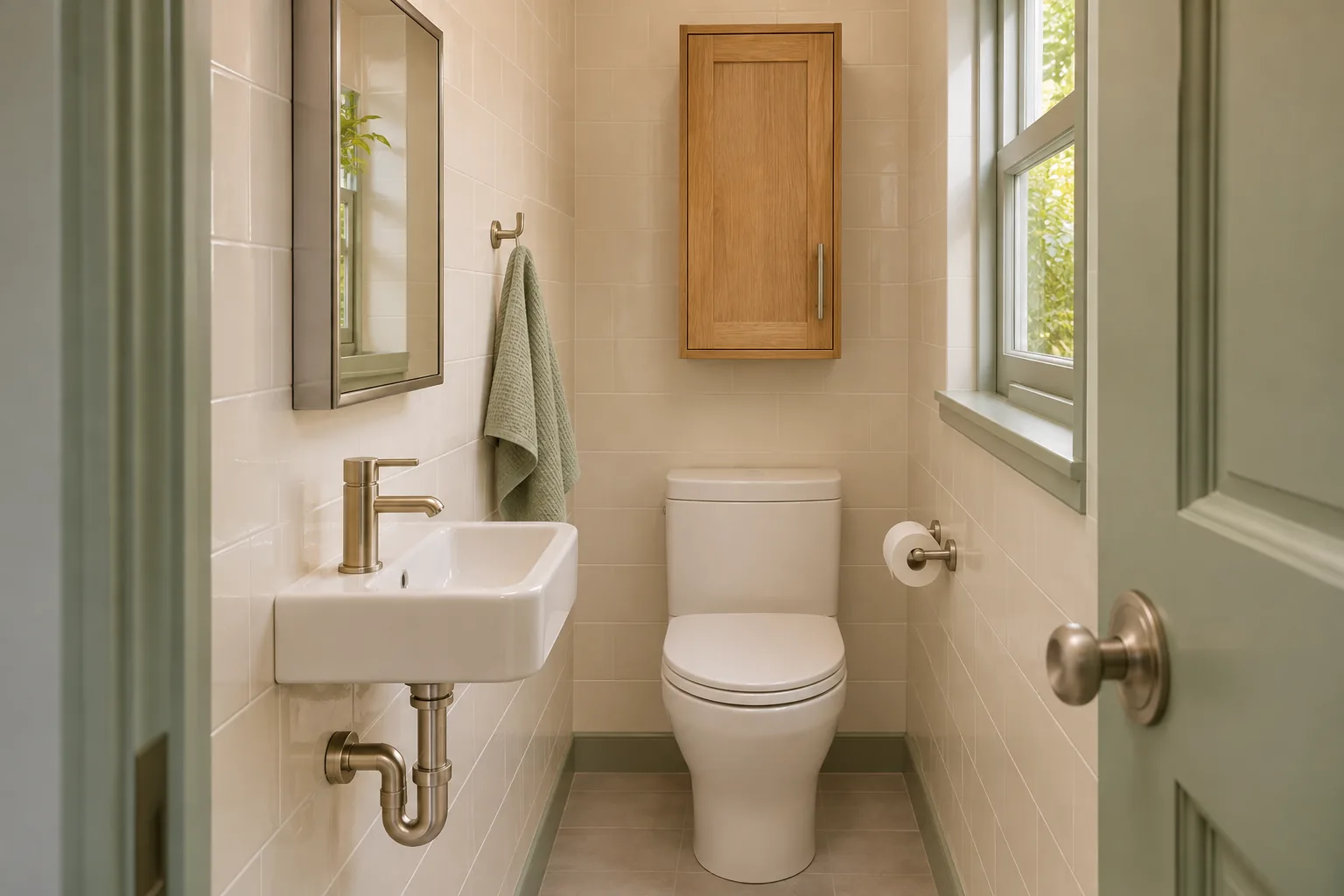
The best very small bathroom storage ideas keep everyday essentials close without crowding the sink, toilet or doorway. Start inside existing cupboards, then use shallow walls, doors and portable pieces. Pick the options that fit your room; a few well-placed organizers are more useful than filling every spare gap.
Table of Contents
17 storage ideas to adapt to your bathroom
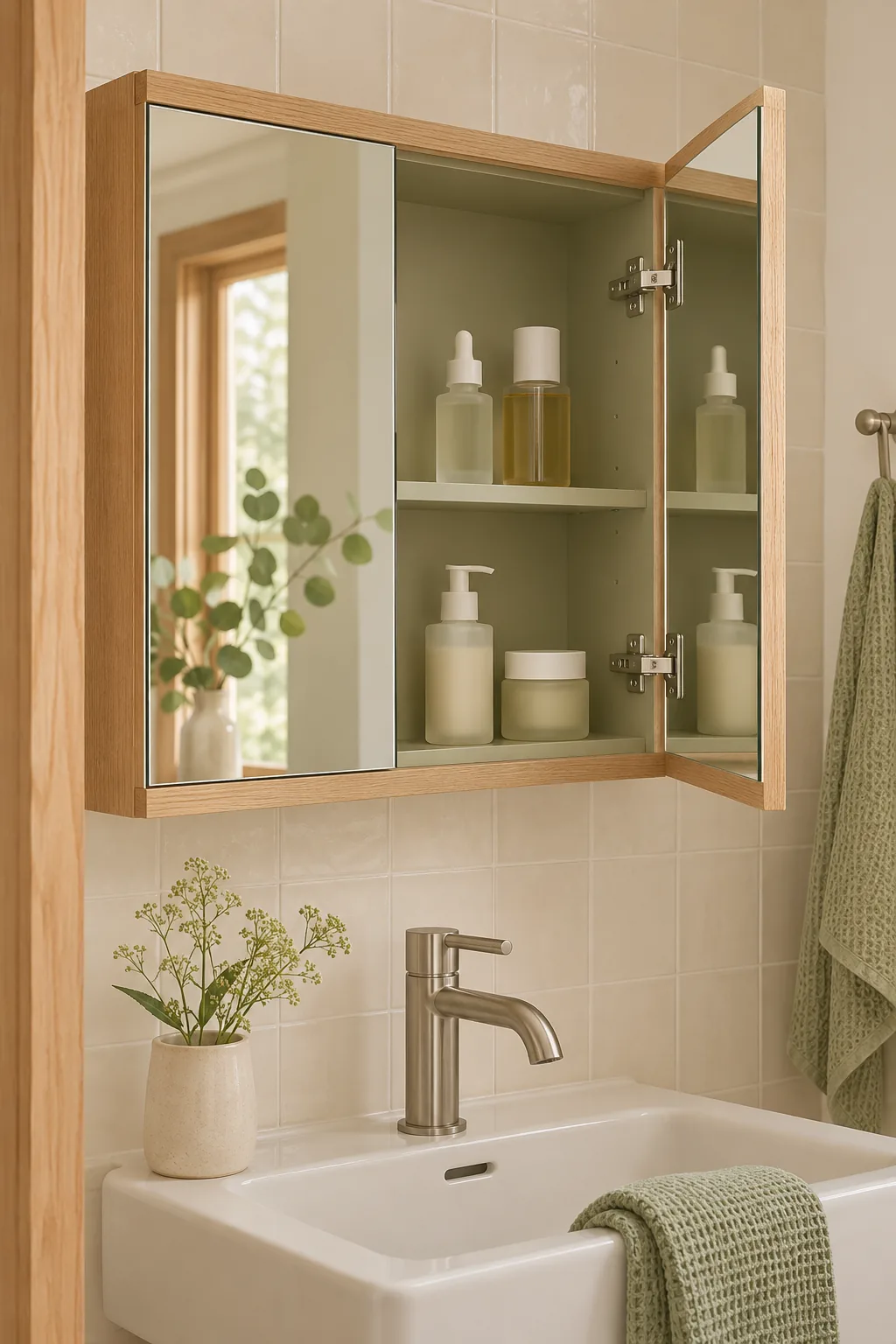
1. Replace a plain mirror with a shallow cabinet
Swap a plain mirror for a shallow cabinet to clear the sink ledge. Arrange shelves around daily toiletries. Check the door clears taps and lights; use suitable fixings, and check hidden services before recessing a cabinet.
 Save
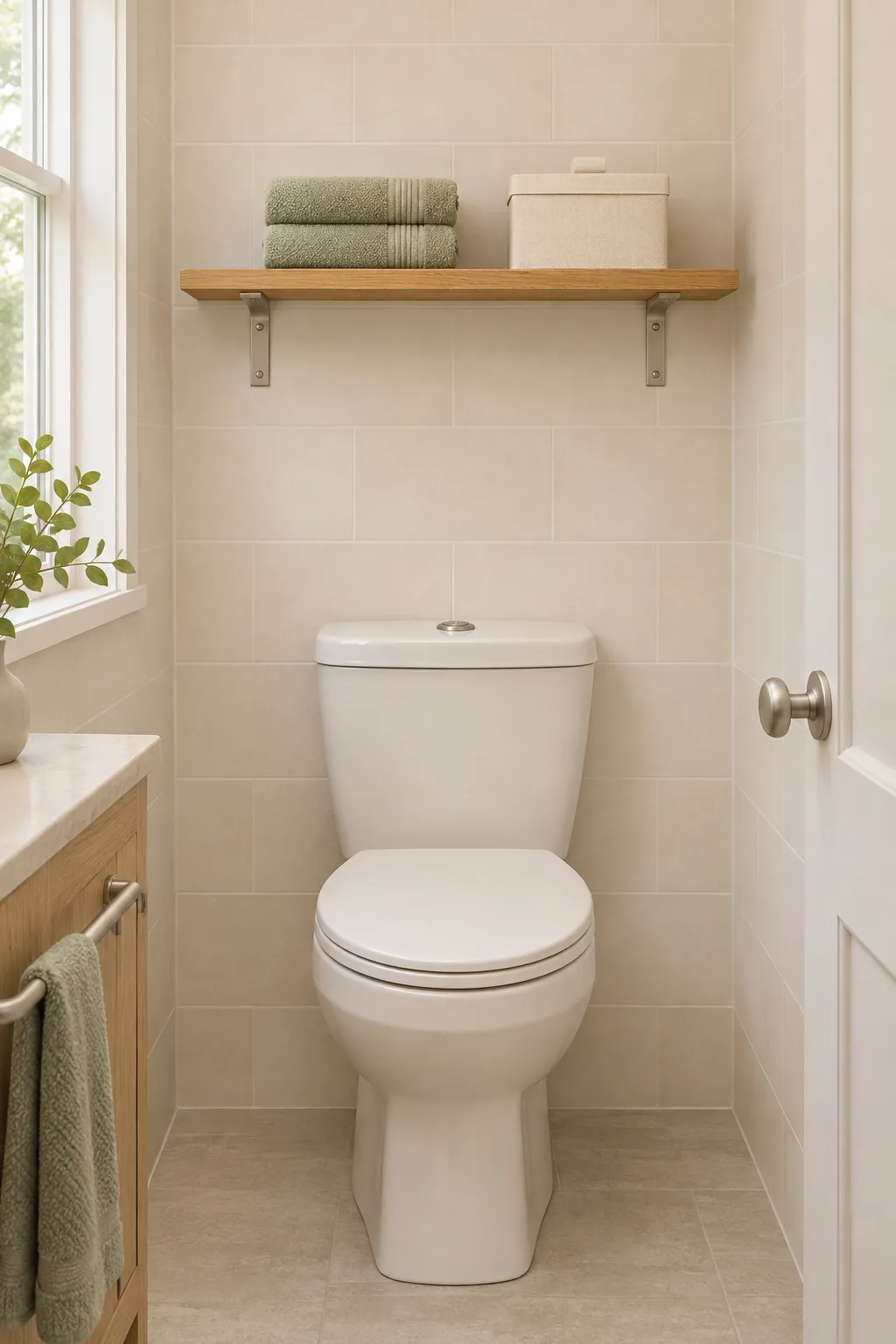
2. Use the wall above the toilet sparingly
Use one shallow shelf for a few dry hand towels or a light covered box. Check seated and standing headroom, toilet-lid movement and cistern access. Secure it with suitable fixings; keep heavy or breakable objects elsewhere.
 Save
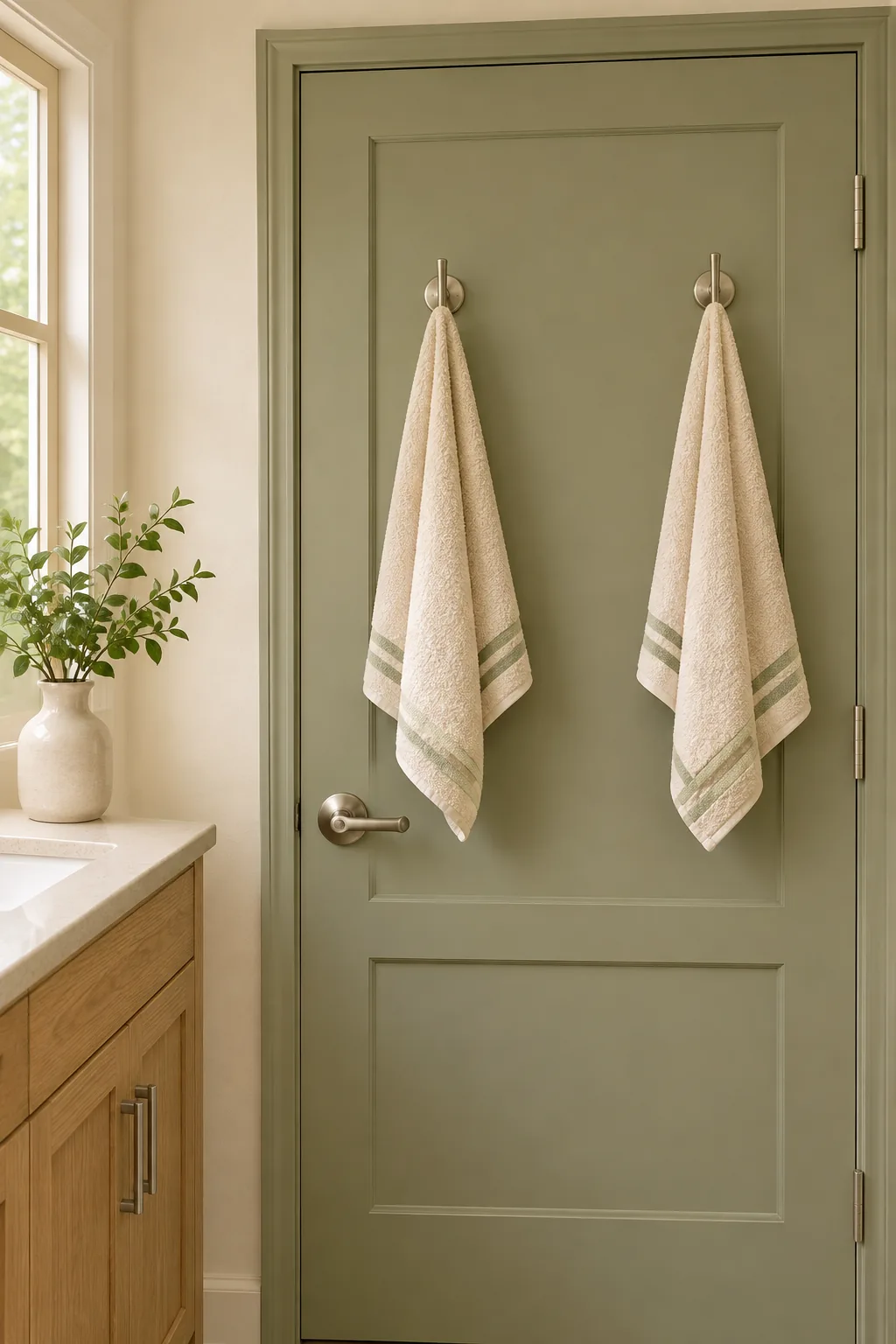
3. Give towels separate hooks behind the door
Space door hooks so each towel hangs separately rather than overlapping. Check the loaded door opens and closes freely, with fabric clear of nearby fixtures. If towels stay damp here, move them somewhere with better airflow.
 Save
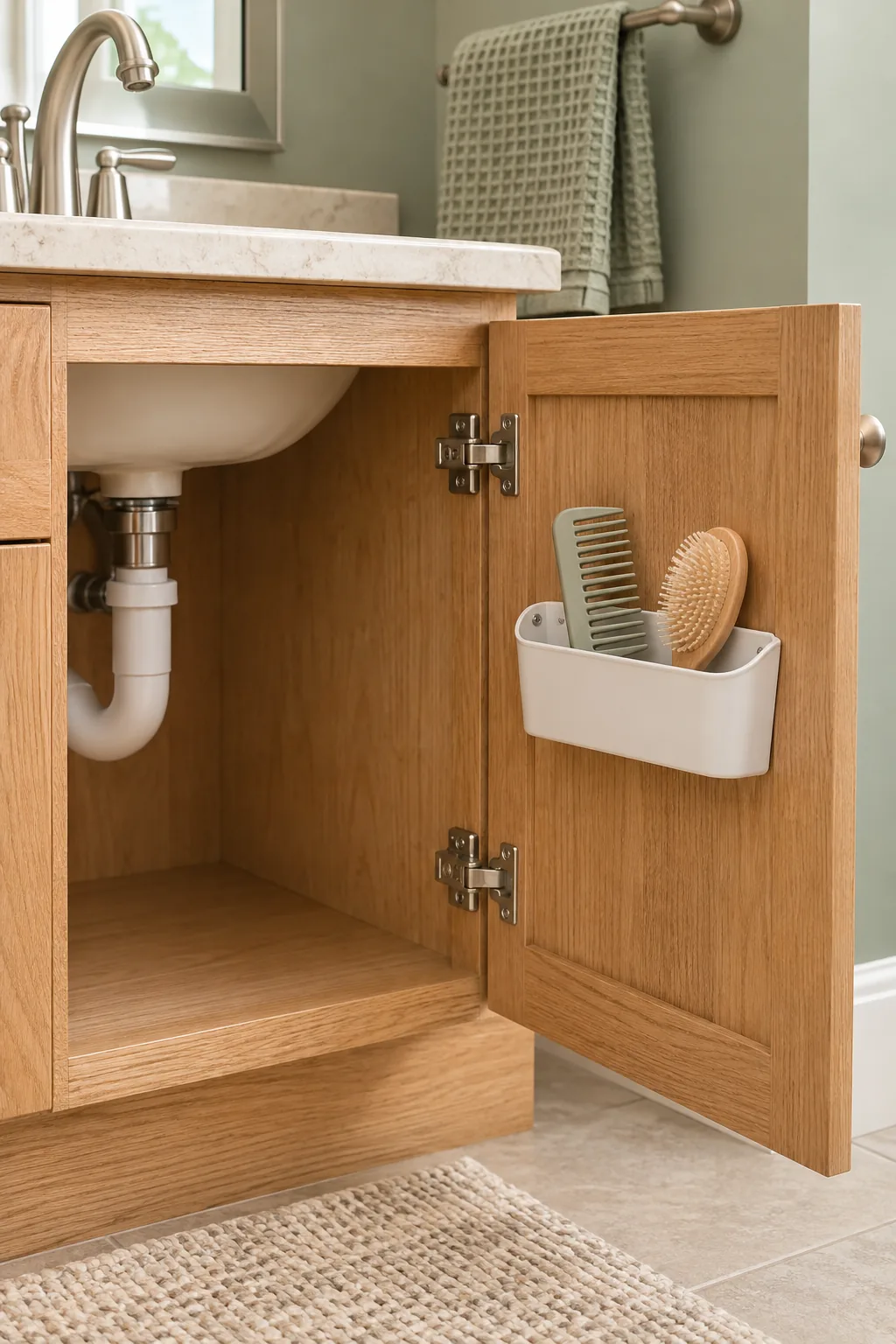
4. Put a shallow bin inside a vanity door
Mount a shallow bin inside a vanity door for combs and brushes. Keep contents light and below the rim. Before attaching it, test the loaded bin through the door’s full movement to avoid shelves, hinges and pipes.
 Save
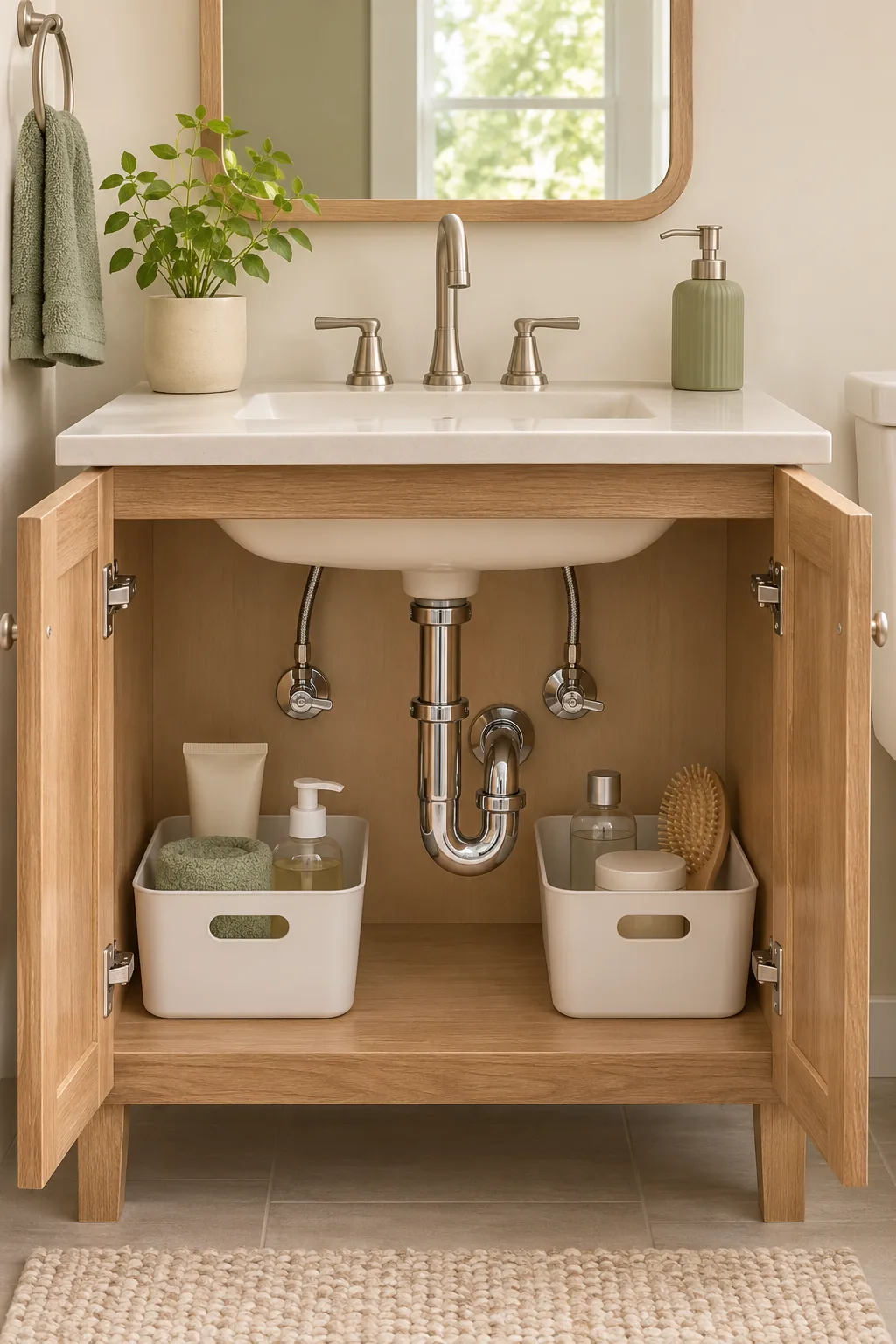
5. Work around sink pipes with separate removable bins
Place separate lift-out bins around the drain trap instead of forcing in one large organizer. Group toiletries by task. Keep valves and joints accessible, leave space to spot leaks, and secure hazardous products away from children.
 Save
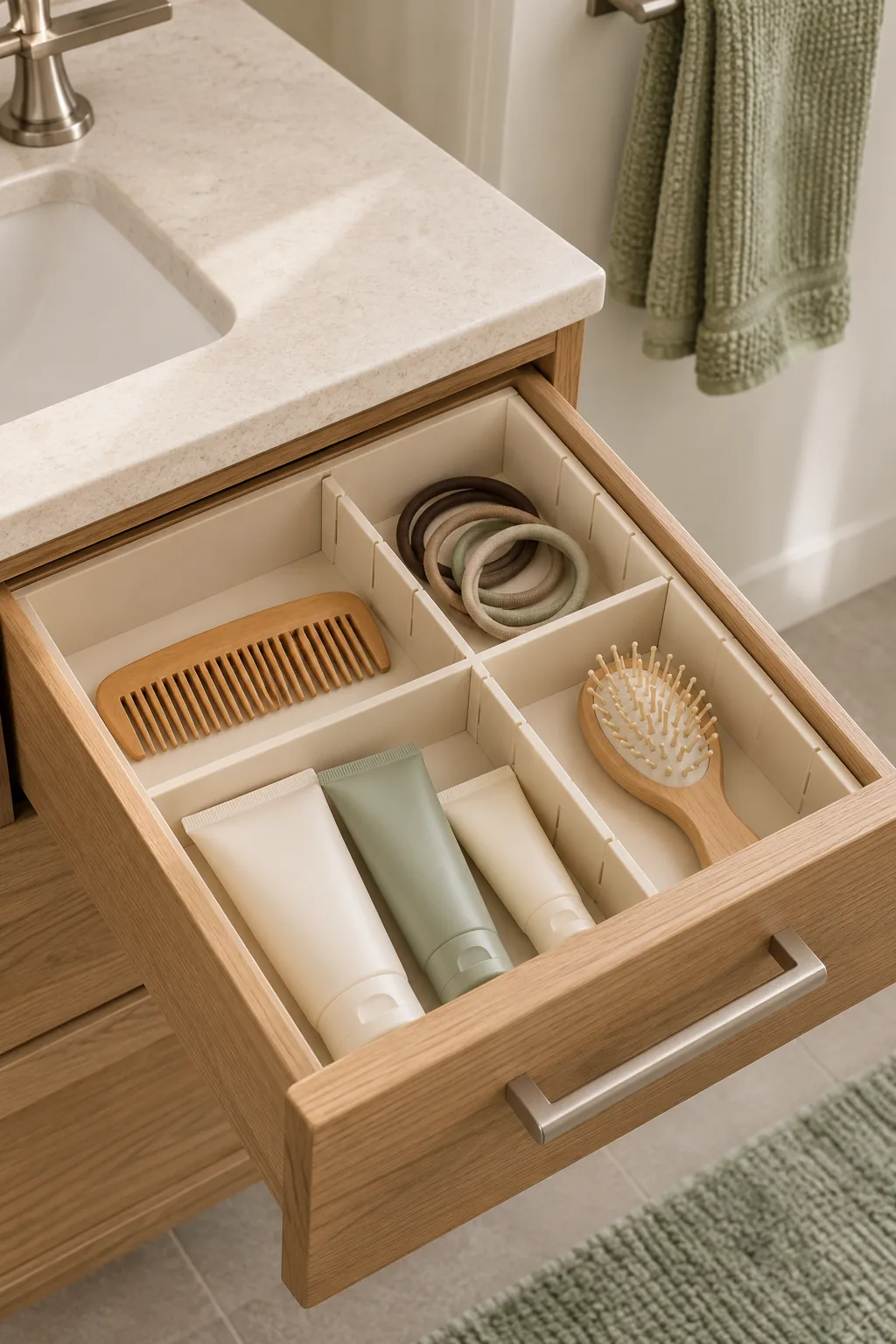
6. Divide a shallow drawer into useful sections
Divide a shallow drawer into sections for combs, hair ties and small tubes. Sort first, then size compartments around what remains. Measure usable depth beneath the basin and secure sharp tools; tidy storage is not automatically child-safe.
 Save
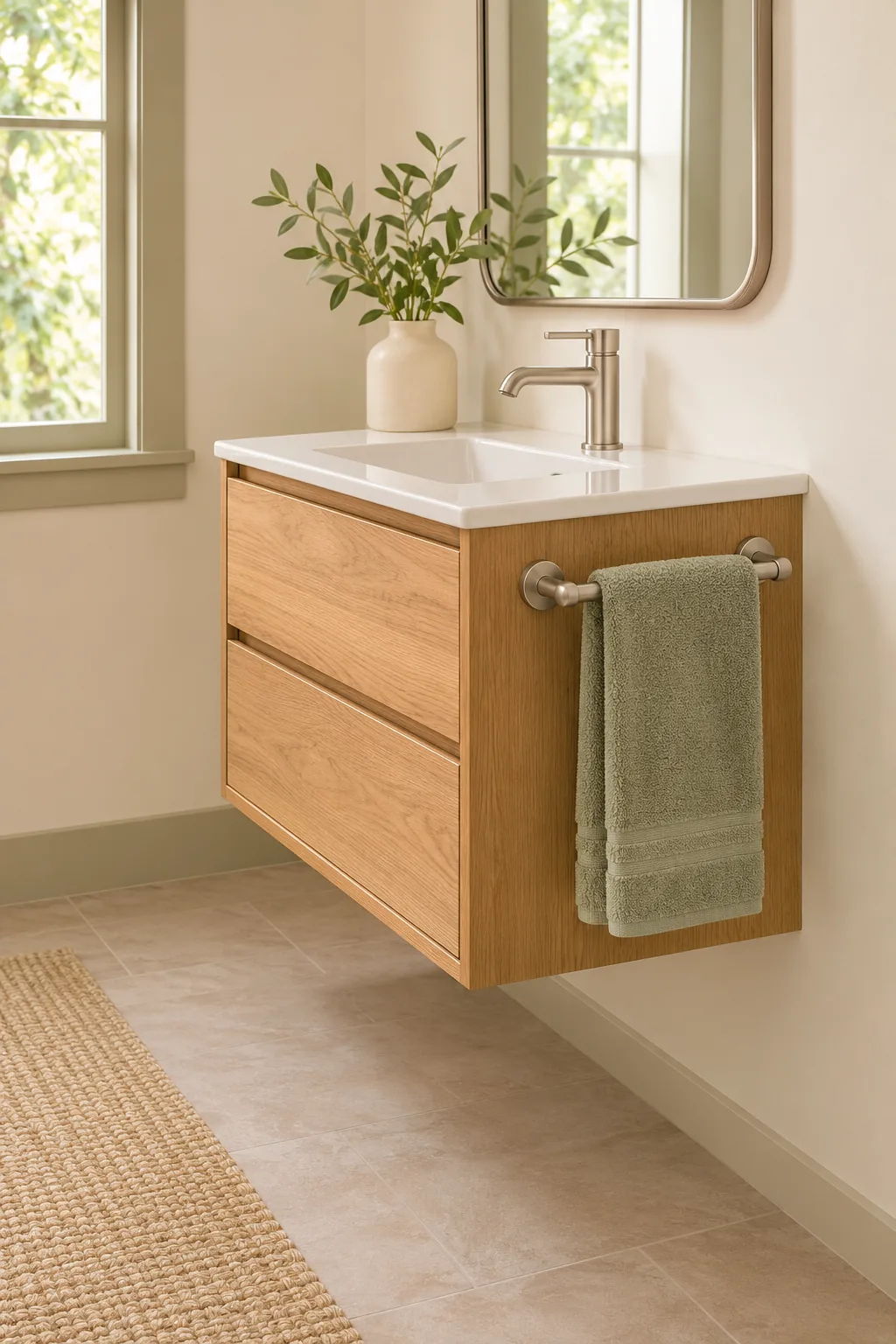
7. Add a short rail to the side of the vanity
Add a short rail to the vanity side for one hand towel. Check the cabinet manufacturer’s mounting guidance; thin panels may not support screws. Keep the rail and hanging towel clear of doors and the walking route.
 Save
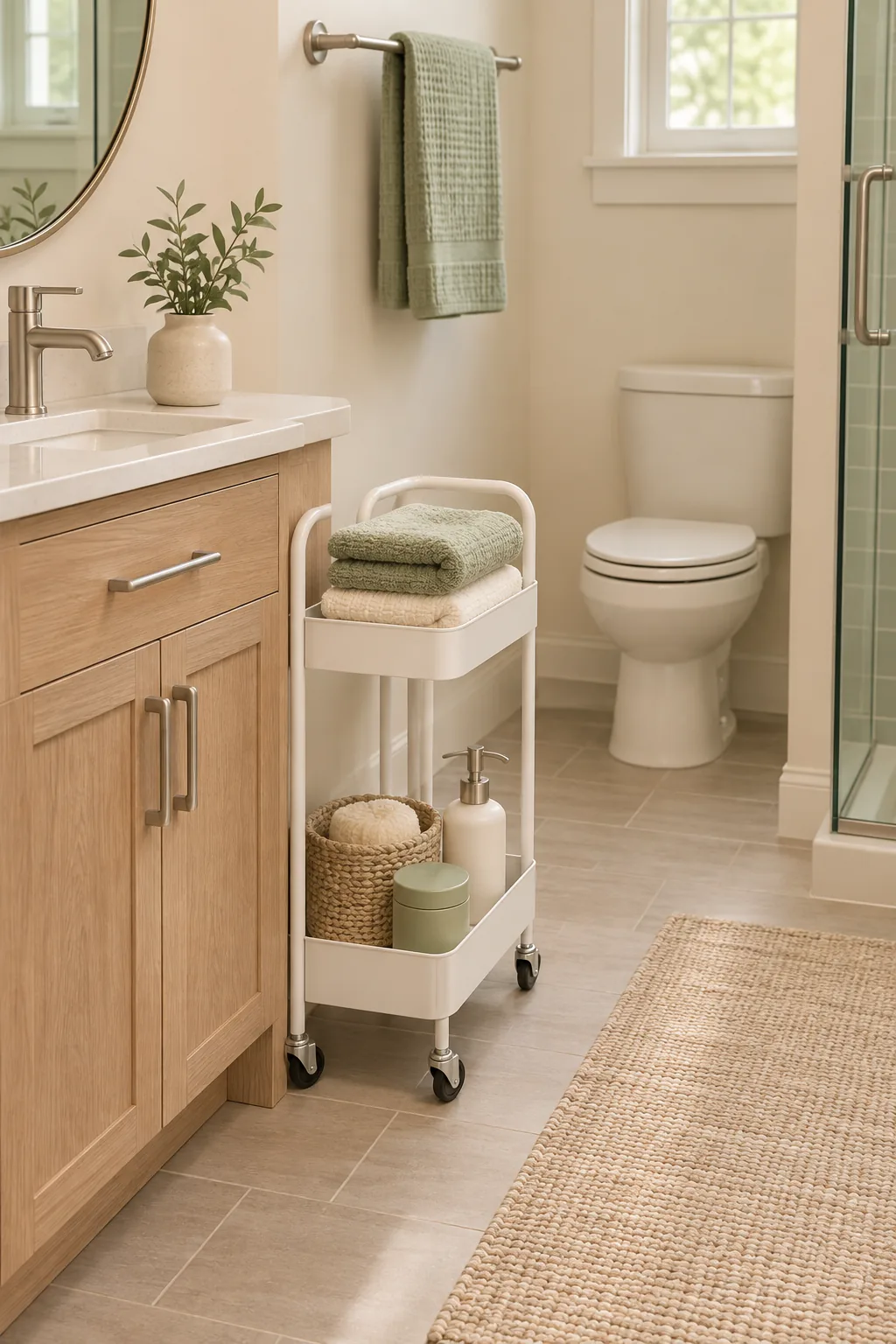
8. Try a slim trolley only where it can move
Use a slim trolley for washcloths and daily toiletries only if it can roll out easily. Measure wheels and handles, not just shelves. Keep loads modest, follow stability guidance and preserve access beside the toilet and doorway.
 Save
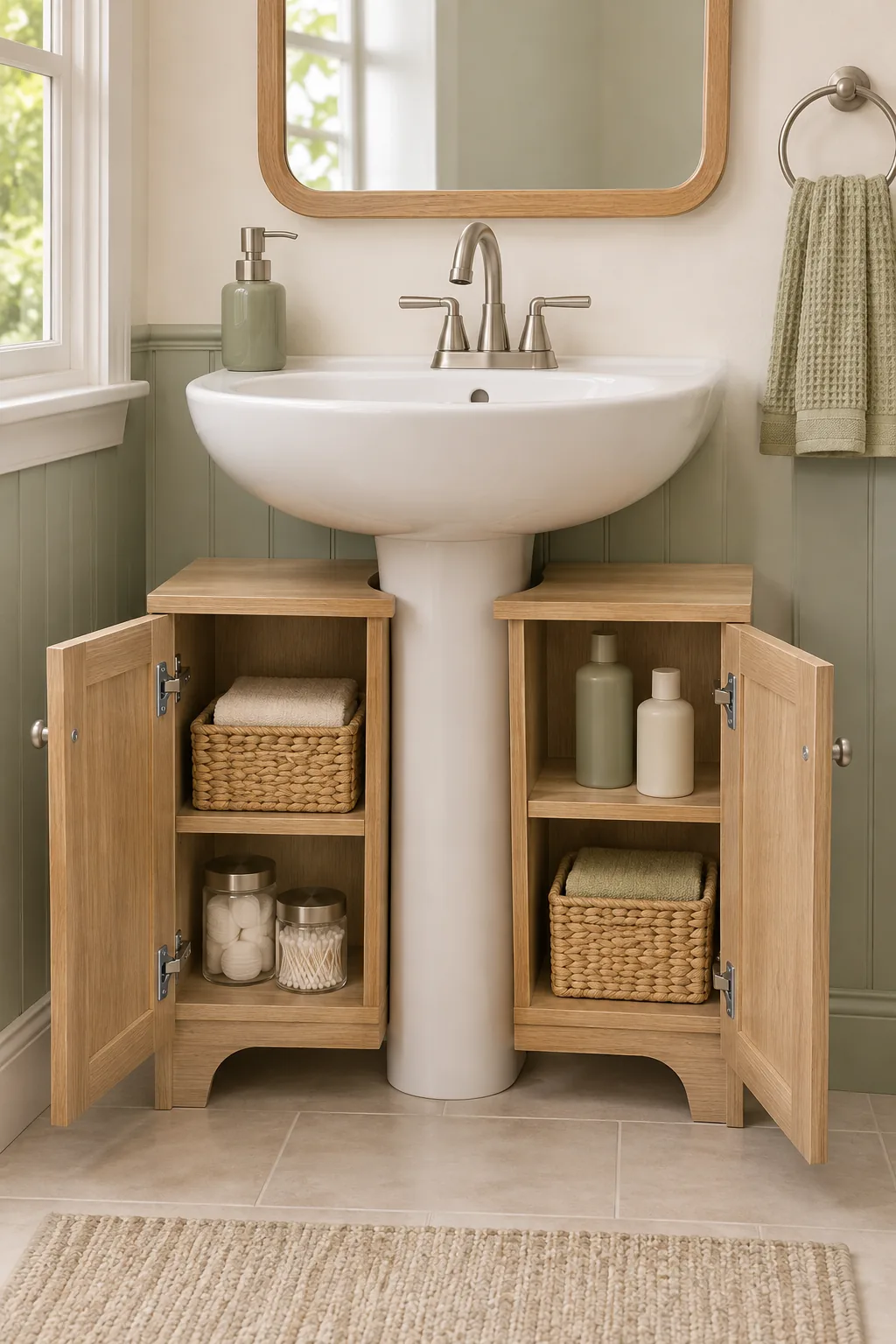
9. Fit storage around a pedestal sink
Choose a purpose-made cabinet that wraps around your actual pedestal sink. Compare its internal cutout with the pedestal and pipework. Check foot space, door movement, cleaning and valve access; the cabinet must not support the basin.
 Save
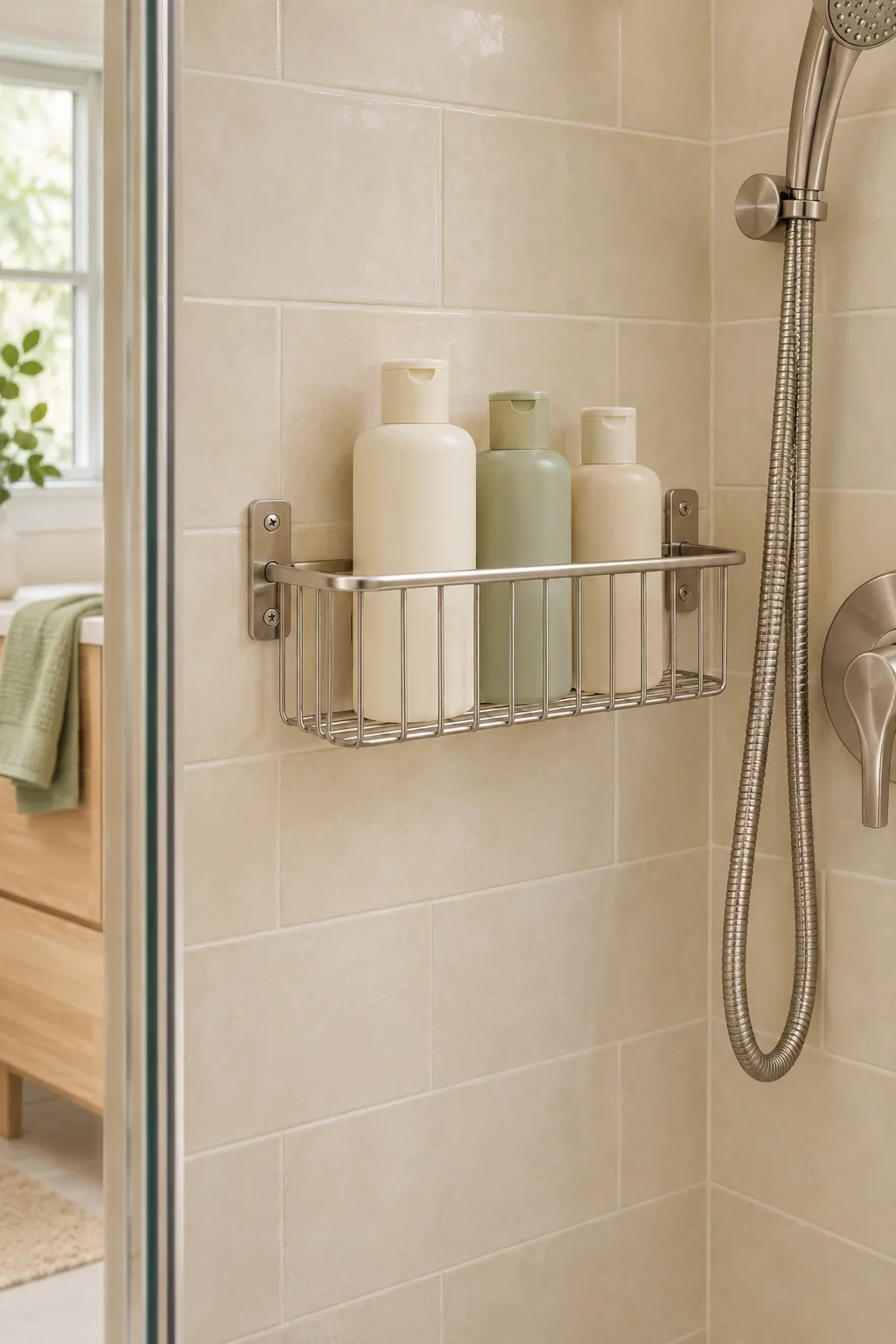
10. Lift shower bottles into a draining caddy
Lift daily shower bottles into a draining caddy and store refills elsewhere. Choose fittings rated for the surface, exposure and loaded weight. Keep controls and doors clear; check pump-use guidance, and never treat storage as a grab bar.
 Save
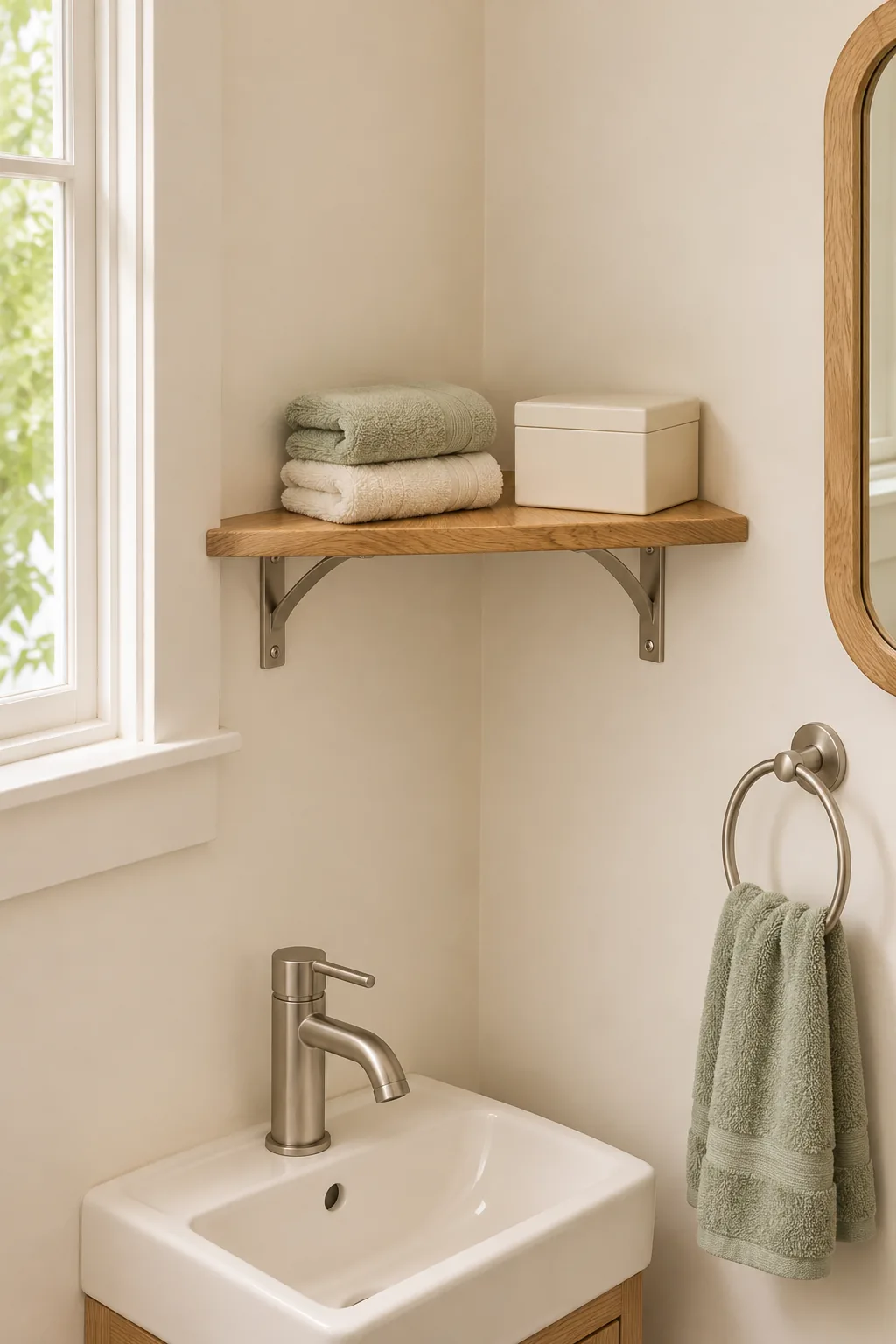
11. Use a small shelf in a dry corner
Use a small triangular shelf for a couple of washcloths or a light box in a dry corner. Check shoulder and head clearance. Locate hidden services before drilling, and choose fixings for the wall construction beneath any tiles.
 Save
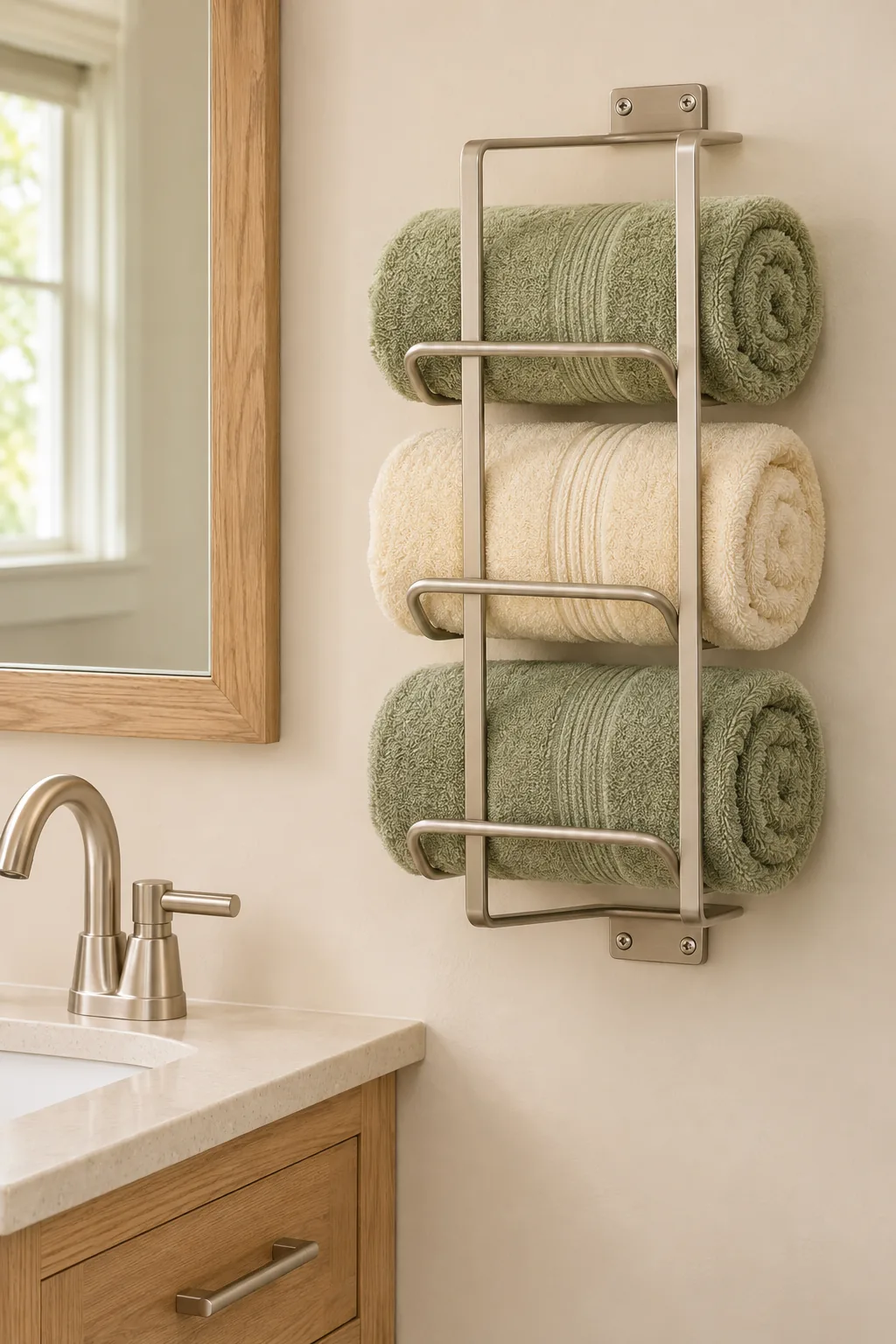
12. Store a small set of dry towels vertically
Store a small supply of clean, fully dry towels in a vertical wall rack. Leave room to remove one easily. Keep the rack away from splashes and check its fixings; tightly packed rolls are storage, not a drying solution.
 Save
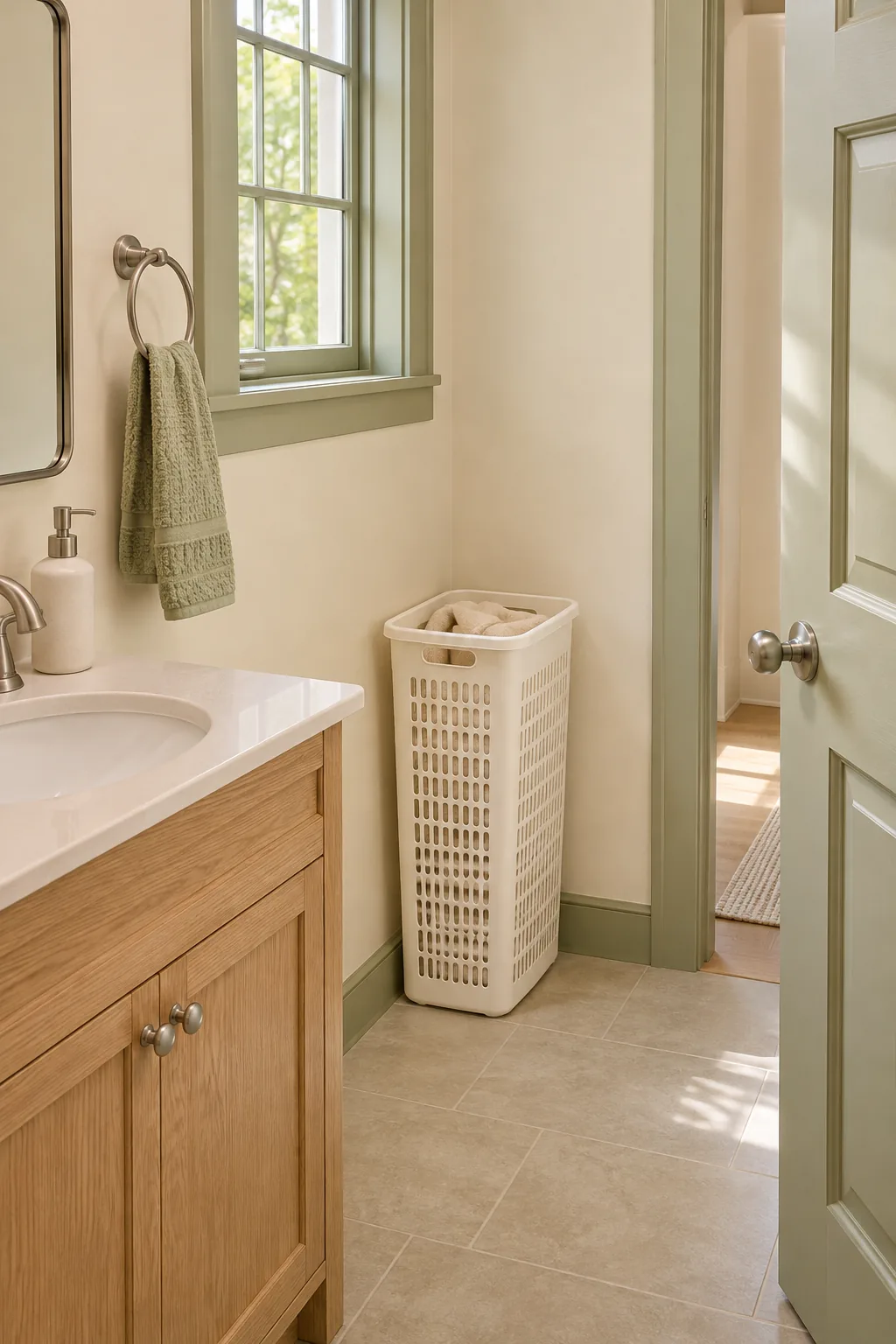
13. Choose a narrow hamper with a realistic capacity
Choose a slim, washable hamper for used washcloths and empty it regularly. Check its footprint with the lid open and keep the doorway clear. Let wet items dry first; ventilation holes cannot prevent problems in compressed damp laundry.
 Save
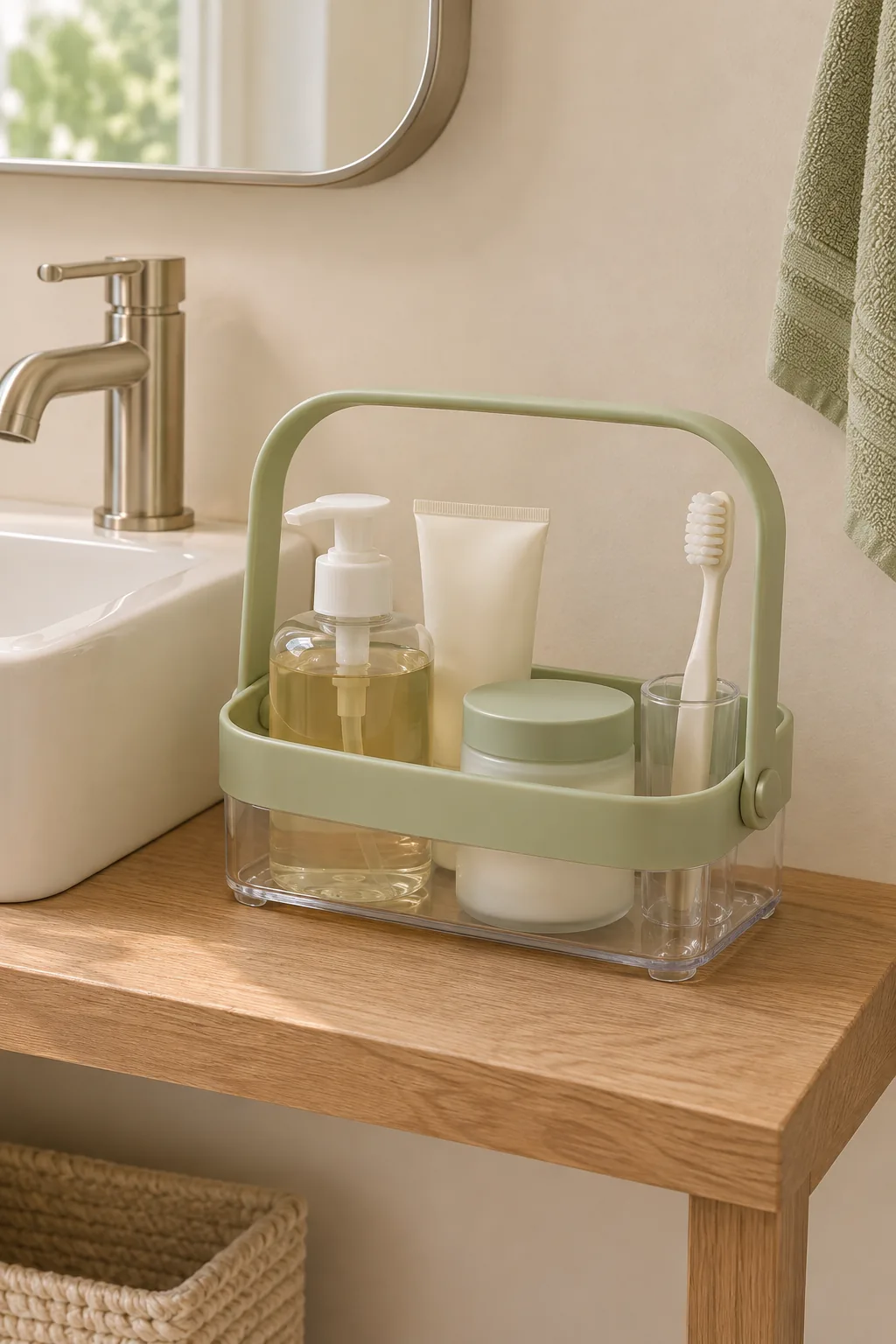
14. Make one portable caddy for a daily routine
Group one person’s daily products in a small handled caddy, then return it to a designated shelf after use. Choose a washable container that is comfortable to lift loaded. Keep bottles upright and wipe the base before storing.
 Save
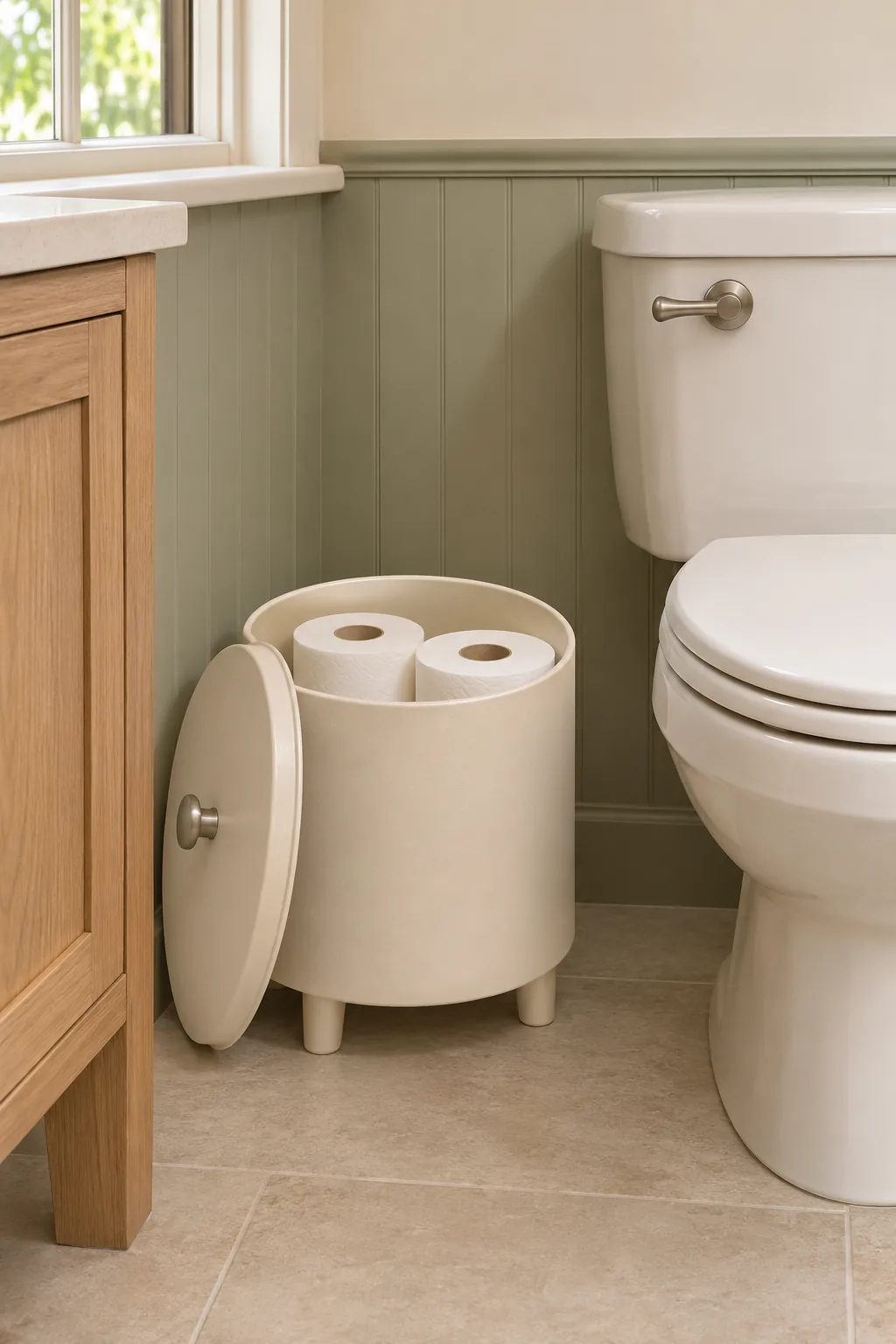
15. Keep only a small covered supply of spare rolls
Keep a small covered supply of spare rolls nearby and bulk packs elsewhere. Check the holder fits your usual roll size and lifts easily for cleaning. Keep it away from splashes; a lid cannot solve a damp floor.
 Save
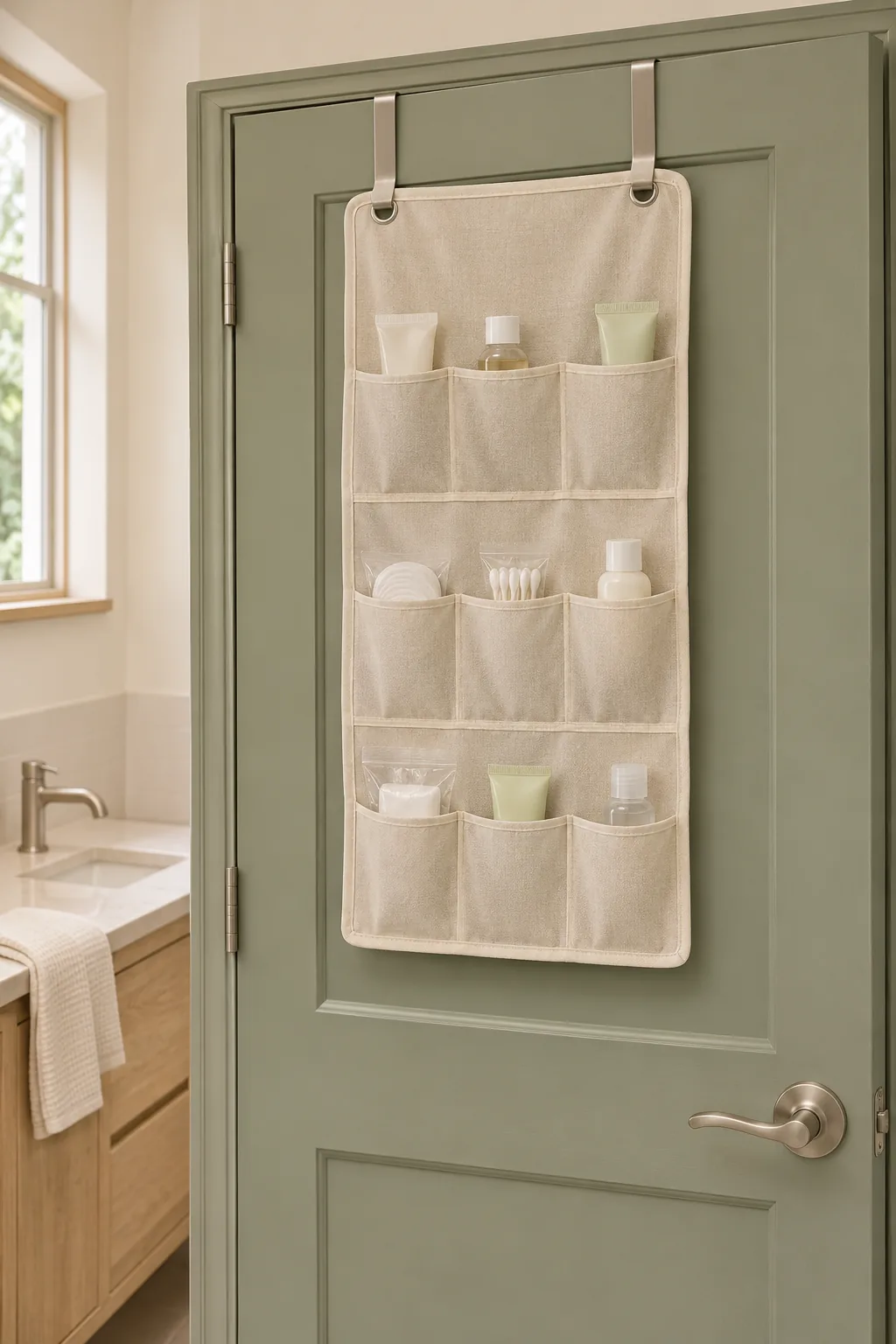
16. Use door pockets for lightweight extras
Use shallow over-door pockets for lightweight sealed toiletries, leaving space rather than filling every opening. Check hook thickness, top clearance and loaded depth. Open the door fully; remove anything that causes sagging or catches nearby furniture.
 Save
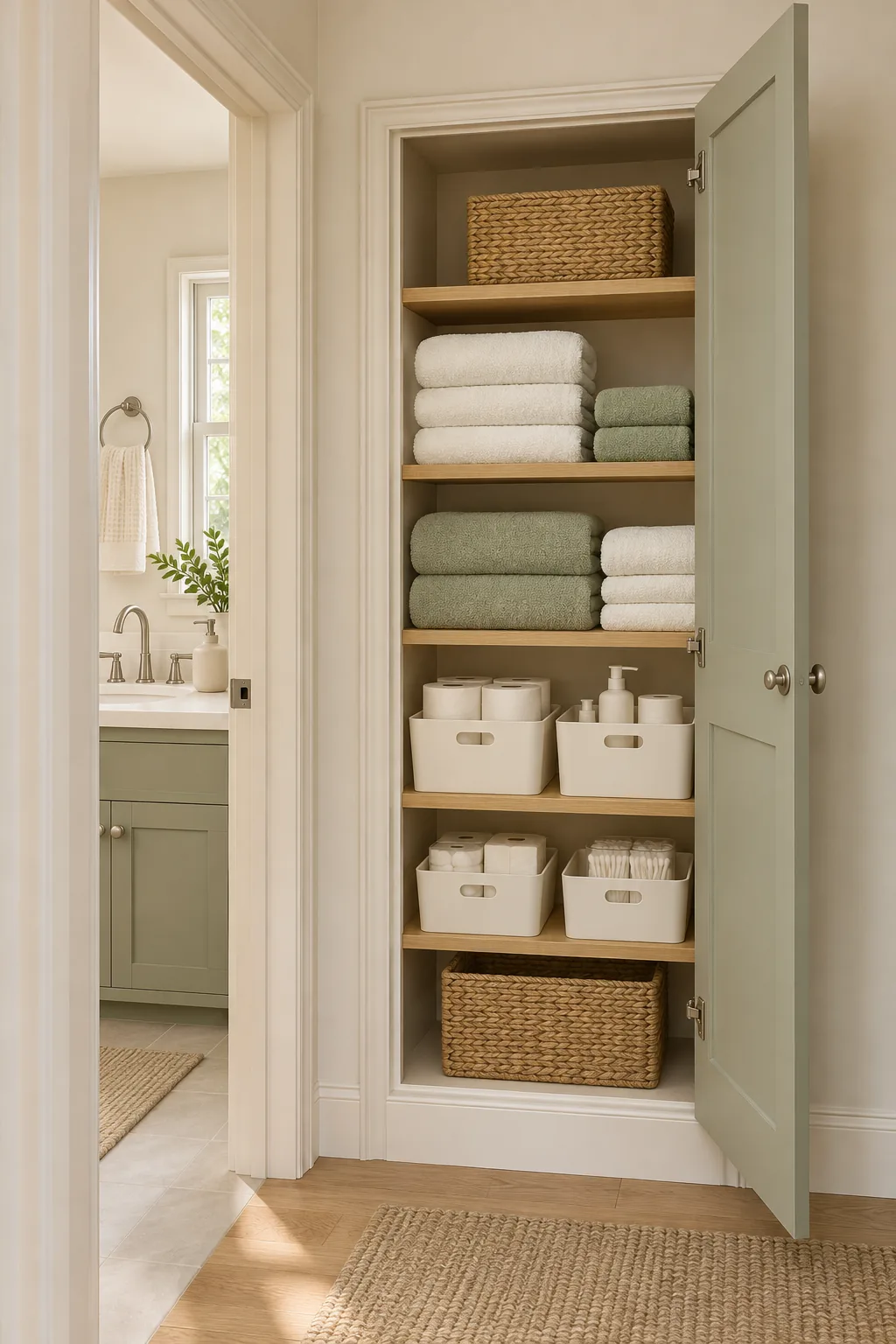
17. Move backup supplies to a nearby cupboard
Move spare towels and unopened toiletries to a dry hallway or bedroom cupboard. Group refills in a lift-out bin for easy restocking. Keep hazardous products secure and check product storage instructions; the bathroom only needs its current supply.
 Save
Make the storage easy to live with
Follow the exact product’s mounting instructions and check rental permission. Keep vents and plumbing accessible, fix leaks and ventilate after bathing. Storage should never obstruct normal movement or maintenance.